

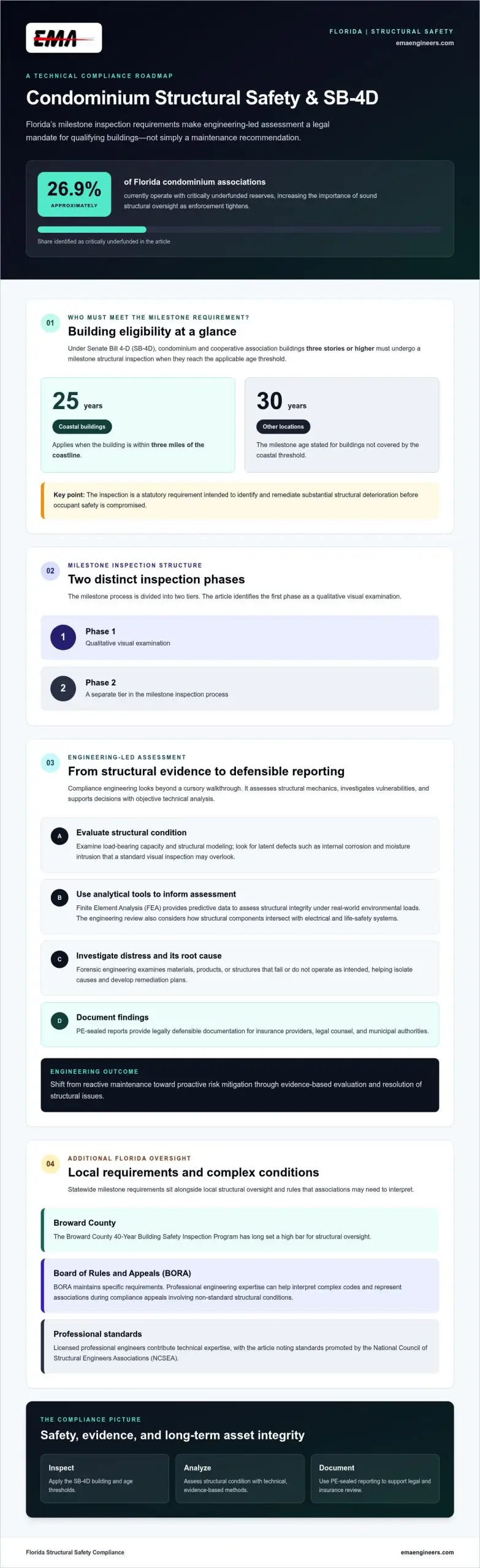
Approximately 26.9% of Florida condominium associations currently operate with critically underfunded reserves, leaving them vulnerable as the state moves toward stricter enforcement of structural standards. For property owners and board members, the landscape of building safety compliance engineering has transitioned from a recommendation to a rigorous legal mandate. Many stakeholders recognize the pressure of looming deadlines and the technical complexity of new statutes such as SB-4D, particularly when the safety of residents and the longevity of the asset are at stake.
We provide a disciplined roadmap to master these complexities, ensuring your property achieves long-term structural integrity through precise engineering oversight. You will gain a clear understanding of mandatory Florida inspections and the practical benefits of advanced technical audits. This article examines the mandatory requirements for Florida milestone inspections, the implications of the 9th Edition of the Florida Building Code, and the way professional PE-sealed reports establish the legal and insurance peace of mind your association requires.
Key Takeaways
- Understand the role of building safety compliance engineering in applying forensic-level analysis to meet Florida’s mandatory structural standards.
- Identify the critical milestones for SB-4D inspections, specifically the 25-year and 30-year requirements for coastal and inland multi-story buildings.
- Learn how technical tools like Finite Element Analysis (FEA) provide predictive data to ensure structural integrity under real-world environmental loads.
- Discover the strategic benefits of PE-sealed engineering reports in mitigating legal risks and streamlining insurance claim resolutions for property associations.
What is Building Safety Compliance Engineering?
Building safety compliance engineering represents the disciplined application of technical standards to verify that a structure meets all relevant regulatory requirements. It is not a mere checklist or a cursory walkthrough; it is a rigorous methodology designed to ensure long-term stability and occupant safety. By integrating advanced analytical techniques, EMA Structural Forensic Engineers provide property owners with a clear, objective assessment of the condition of their asset.
Standard building inspections typically focus on visible maintenance issues, but building safety compliance engineering operates at a forensic level. Our licensed professional building engineers in Florida examine the underlying mechanics of a structure to identify vulnerabilities before they manifest as failures. This process culminates in PE-sealed reports, which serve as legally defensible documents for insurance providers, legal counsel, and municipal authorities.
To better understand the evolving regulatory standards and design shifts, watch this helpful video:
Adopting this engineering-led approach transforms compliance from a reactive burden into a proactive risk mitigation strategy. It is about understanding the fundamental principles of structural integrity and failure to prevent catastrophic events. Instead of waiting for a structural component to show signs of distress, we use data to predict and resolve issues during the compliance lifecycle.
The Core Pillars of Structural Integrity
Maintaining the safety of aging assets requires a precise evaluation of load-bearing capacities and sophisticated structural modeling. Our analysis goes beyond the surface to identify latent defects, such as internal corrosion or moisture intrusion, that standard visual inspections frequently overlook. We also examine the critical intersection of structural components with electrical and life-safety systems to ensure the entire building operates as a cohesive, safe unit across our Florida service areas.
Forensic Engineering in the Compliance Lifecycle
When a structure exhibits signs of distress, we utilize forensic engineering to isolate the root cause and develop effective remediation plans. Forensic engineering is the investigation of materials, products, or structures that fail or do not operate as intended. This objective, data-driven analysis is essential for safety audits, providing the technical evidence needed to address complex forensic engineering challenges in high-density or coastal environments without relying on superficial assessments.
Florida’s Regulatory Landscape: SB-4D and Milestone Inspections
Florida’s regulatory environment underwent a paradigm shift following the enactment of Senate Bill 4-D (SB-4D). This legislation mandates that condominium and cooperative association buildings three stories or higher undergo a milestone structural inspection once they reach a specific age. For buildings reaching 30 years of age, or 25 years if located within three miles of the coastline, these inspections are now a statutory requirement. It is no longer a matter of elective maintenance; it is a critical component of building safety compliance engineering designed to identify and remediate substantial structural deterioration before it compromises occupant safety.
In South Florida, the Broward County 40-Year Building Safety Inspection Program has long set a high bar for structural oversight. While the new statewide milestone mandate aligns with many of these goals, the Board of Rules and Appeals (BORA) maintains specific requirements that can be difficult for associations to navigate alone. Licensed professional engineers, adhering to the rigorous standards promoted by the National Council of Structural Engineers Associations (NCSEA), play a vital role in this process. We provide the technical expertise necessary to interpret BORA’s complex codes and represent associations during the compliance appeal process when non-standard structural conditions arise.
Phase 1 vs. Phase 2 Milestone Inspections
The milestone process is divided into two distinct tiers. Phase 1 involves a qualitative visual examination of a building’s primary structural members and systems. If the engineer identifies signs of substantial structural deterioration, the law mandates a Phase 2 inspection. This more intensive stage often requires destructive testing or forensic analysis to determine the structural integrity of the asset. For those stakeholders approaching these deadlines, you can learn more about our building engineers in Florida and how we manage the transition from visual assessment to technical verification.
Specialized Local Compliance: Balconies and Thresholds
Regulatory adherence also extends to specialized building components that are highly susceptible to the corrosive coastal environment of Florida. Compliance with DBPR HR-7020 is mandatory for hotel and apartment balcony inspections, requiring a licensed professional to verify the safety of railings and walking surfaces. A thorough concrete balcony inspection conducted under current engineering standards is essential for identifying deterioration in these high-risk structural elements before they become a liability under SB-4D and SB-154. Looking forward, the new 2026 requirements for windows and doors threshold inspections will impose stricter standards on buildings within high-velocity hurricane zones. To prepare for these shifts, property managers should explore Daytona window and door threshold inspection services to ensure their building envelopes meet the latest safety benchmarks.
Managing these multifaceted requirements requires a disciplined partner who understands the intersection of engineering and law. Engaging with EMA Structural Forensic Engineers early in the compliance cycle allows for a methodical approach to inspections, ensuring your property meets all state and local mandates without the pressure of last-minute repairs.
The Engineering Audit Process: From FEA to PE-Sealed Reports
A professional structural integrity audit is a multi-phased engineering operation that converts physical observations into actionable data. We begin with a methodical field survey to document existing conditions, which serves as the empirical foundation for our analytical models. This rigorous data collection is essential for meeting the mandates of Florida Senate Bill 4-D, ensuring that every assessment is rooted in verified physical evidence rather than conjecture. Once we finalize the field data, the focus shifts to computational validation, where the core of building safety compliance engineering occurs.
The transition from field collection to the final report involves a synthesis of engineering judgment and advanced software modeling. We analyze the collected data to identify structural vulnerabilities, stress concentrations, and potential failure points. This process culminates in a comprehensive PE-sealed compliance report. These documents provide property owners with a definitive statement on the building’s condition and are essential for meeting municipal filing requirements and securing insurance renewals across our Florida service areas.
Advanced Structural Modeling and FEA
Finite Element Analysis (FEA) is the cornerstone of modern structural validation. It is a sophisticated tool used for simulating stress distribution across complex geometries, allowing us to achieve precise material optimization. By utilizing technical details on Finite Element Analysis in Florida, we can model how a structure reacts to non-linear forces. This structural modeling is vital for assessing hurricane resistance and seismic stability, particularly in aging assets where traditional visual checks cannot account for internal stress dynamics.
Request a technical consultation for FEA modeling
Threshold Inspections for New and Existing Construction
Threshold inspectors provide an additional layer of oversight, specifically focusing on structural load-bearing components that are critical to a building’s stability. Their presence ensures that any major repairs or new construction phases strictly adhere to the Florida Building Code. When a building undergoes significant remediation, the threshold inspector verifies that every structural connection and material grade matches the engineered design. Threshold inspections are critical for multi-story safety because they provide continuous verification that the primary structural system can support its intended loads without risk of failure.
Our approach ensures that every phase of the audit is handled with clinical precision by EMA Structural Forensic Engineers. By integrating forensic investigation with predictive modeling, we move beyond simple compliance to provide a roadmap for the building’s long-term functional excellence. This methodical progression ensures that no technical detail is overlooked during the safety audit lifecycle.
Achieving Strategic Compliance: Long-Term Asset Protection
Strategic building safety compliance engineering shifts the focus from avoiding penalties to preserving the long-term viability of a property. While meeting the minimum requirements of Florida’s statutes is necessary, viewing these mandates as a baseline for asset protection provides a competitive advantage in an increasingly regulated market. A clear divide is emerging in Florida real estate; buildings that demonstrate rigorous compliance and structural health are more likely to maintain their value and secure favorable financing terms.
Beyond legal adherence, engineering-led audits provide a technical foundation that facilitates smoother insurance claim resolutions. After a significant weather event, having a pre-existing, PE-sealed record of a building’s structural condition is invaluable. It removes the ambiguity often found in damage assessments, allowing for a data-driven comparison between pre-storm integrity and post-event distress. This level of oversight makes it easier for property managers to defend their claims and accelerate the recovery process.
As of January 1, 2026, Florida law prohibits condominium associations from waiving or underfunding reserves for mandatory structural components. Our structural integrity audits provide the precise data required for accurate reserve budgeting, ensuring that maintenance funds are allocated based on actual engineering needs rather than estimates. This methodical approach prevents the need for sudden special assessments that can destabilize an association’s financial health.
Hurricane and Storm Damage Assessments
In a state prone to extreme weather, post-storm inspections are vital for maintaining continuous safety compliance. We evaluate the structural impact from wind, flood, and debris to identify hidden compromises in the building envelope or primary load-bearing systems. These assessments ensure that a structure remains safe for occupancy and that any required repairs meet current engineering standards. For comprehensive recovery support, property owners should utilize professional storm damage inspections and assessments to document every technical detail for insurance and regulatory purposes.
Due Diligence and the Future of Florida Real Estate
Structural due diligence is no longer an optional step in commercial transactions; it’s a mandatory requirement for sophisticated buyers and lenders. Establishing a “Golden Thread” of engineering records ensures that every modification, inspection, and repair is documented with clinical precision. This transparency protects stakeholders from inherited liabilities and provides a clear roadmap for future maintenance. To understand the complexities of these evaluations, consult our Structural Due Diligence for Commercial Properties: A Forensic Engineering Guide. By positioning EMA Engineers as your collaborative partner, you ensure that even the most complex structural challenges are resolved with technical authority and professional sobriety.
Securing Structural Longevity Through Engineering Precision
Florida’s building safety standards have evolved into a rigorous framework that demands clinical precision and technical accountability. Successful navigation of these requirements depends on more than simply meeting statutory deadlines; it requires a deep understanding of structural mechanics and forensic analysis. By integrating building safety compliance engineering into your long-term management strategy, you transform a mandatory regulatory burden into a proactive system for asset preservation and risk mitigation.
Our state-licensed Professional Engineers specialize in the nuances of SB-4D Milestone inspections and BORA compliance, ensuring every audit is supported by empirical data. Whether through Phase 2 destructive testing or advanced Finite Element Analysis, we provide the PE-sealed reports necessary for insurance verification and legal defensibility. These documents serve as a definitive record of technical evidence, protecting your association’s interests during real estate transactions or storm damage claims. This methodical approach ensures your property remains safe, compliant, and structurally sound for decades to come.
Schedule your Florida building safety compliance consultation today
We’re ready to partner with you to resolve your most complex structural challenges with the technical discipline and professional sobriety your investment deserves.
Frequently Asked Questions
Is building safety compliance engineering mandatory for all Florida buildings?
Building safety compliance engineering is mandatory for specific occupancy types and building heights defined under Florida Senate Bill 4-D. While all commercial structures must adhere to the Florida Building Code, the rigorous milestone inspection requirements primarily target condominium and cooperative association buildings that are three stories or higher. For these properties, compliance is a legal necessity once the structure reaches the 25-year or 30-year age threshold.
What is the difference between a Milestone Inspection and a 40-Year Recertification?
A Milestone Inspection is a statewide structural assessment required by SB-4D once a building reaches 30 years of age, or 25 years if it’s within three miles of the coast. In contrast, the 40-Year Recertification is a localized program specific to counties like Miami-Dade and Broward. The newer statewide milestone laws generally supersede these older regulations by requiring structural evaluations at an earlier building age to ensure continuous safety.
Can a standard building inspector perform a Florida SB-4D Milestone Inspection?
No, a standard building inspector cannot perform these mandated assessments; the law requires a licensed architect or professional engineer to conduct the inspection. The technical complexity of building safety compliance engineering necessitates a high level of expertise to evaluate structural integrity and identify substantial deterioration. Only a Professional Engineer (PE) or Registered Architect can provide the required sealed reports to the local building department for legal verification.
How much does a Phase 1 Milestone Inspection cost for a typical condominium?
The cost of a Phase 1 Milestone Inspection varies significantly based on the building’s total square footage, height, and the complexity of its primary structural system. Because every structure presents unique engineering challenges, fees are determined by the scope of the field survey and the depth of the required technical analysis. Property associations should consider these costs as a necessary investment in asset protection, insurance eligibility, and long-term legal compliance.
What happens if a building fails a structural integrity audit?
If a structural integrity audit identifies substantial deterioration, the building owner must immediately begin a Phase 2 inspection to determine the full extent of the damage. This phase often involves destructive testing or forensic investigation to isolate root causes. Once the engineer confirms the deficiencies, the association is legally required to implement a remediation plan to restore the structure’s safety and meet the current Florida Building Code standards.
How does Finite Element Analysis (FEA) help in building safety compliance engineering?
Finite Element Analysis (FEA) provides a predictive model of how a structure reacts to real-world forces like high-velocity winds or seismic activity. By simulating stress distribution across complex geometries, FEA allows engineers to identify potential failure points that are invisible to the naked eye. This advanced modeling ensures that building safety compliance engineering is based on data-driven non-linear analysis rather than simple visual assumptions, facilitating more accurate material optimization and risk mitigation.