

A milestone inspection is no longer a routine building walkthrough; it’s a rigorous forensic audit required by state law to prevent structural catastrophe. For condominium associations across the state, meeting the requirements for a milestone inspection florida sb-4d is a high-stakes mandate that carries significant legal and financial consequences. You likely feel the weight of the December 31st deadline and the anxiety of potential non-compliance penalties that can reach $500 per day. It’s a challenging period for boards tasked with maintaining aging infrastructure while managing owner expectations and rising costs.
This guide provides a definitive roadmap to master these technical requirements and ensure resident safety through precise engineering oversight. We’ll clarify the distinction between habitable stories and parking levels, explain when a Phase 1 visual check must escalate to Phase 2 destructive testing, and detail the forensic procedures used to identify coastal corrosion. By the end of this article, you’ll understand how to integrate these inspections with your Structural Integrity Reserve Study (SIRS) to maintain both physical stability and financial health for your association in 2026 and beyond.
Key Takeaways
- Learn how to navigate the technical requirements of a milestone inspection florida sb-4d to ensure your building meets the 2026 structural recertification standards.
- Understand the critical transition from a Phase 1 visual audit to a Phase 2 intensive forensic investigation when substantial structural deterioration is identified.
- Identify your specific compliance deadlines based on building age and coastal proximity while coordinating your Structural Integrity Reserve Study (SIRS) to avoid daily penalties.
- Discern the importance of engaging a licensed Professional Engineer with forensic expertise to distinguish between superficial cosmetic issues and critical structural hazards.
- Gain a clear roadmap for achieving compliance that protects both the long-term asset stability of the property and the safety of all residents.
Understanding Florida Senate Bill 4-D (SB-4D) and Building Safety
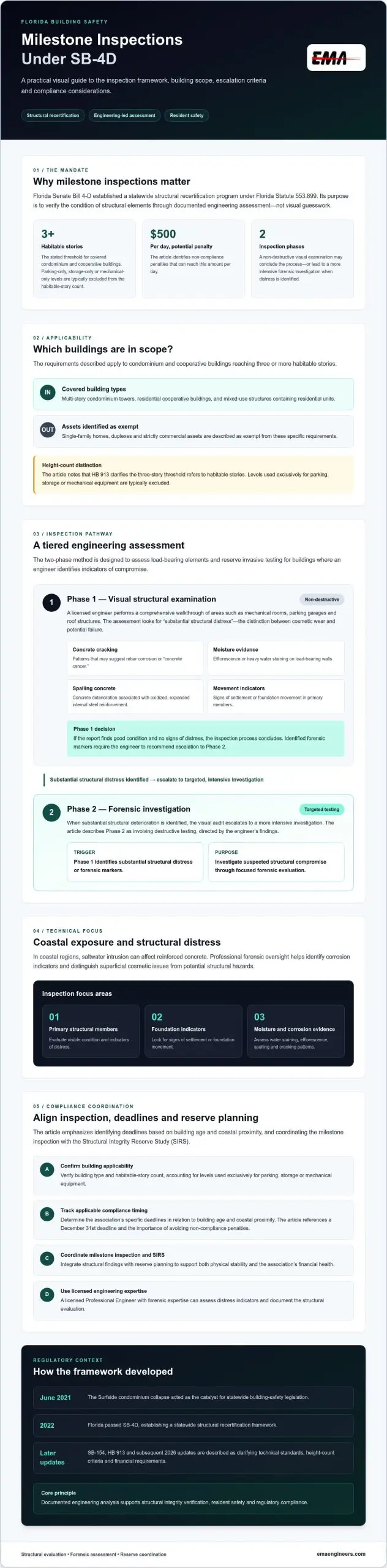
Florida Senate Bill 4-D (SB-4D) serves as the primary legislative framework under Florida Statute 553.899, establishing a mandatory structural recertification program for aging condominiums and cooperatives. This law represents a fundamental shift in building safety oversight. Before this act, structural recertification was largely confined to local programs in Miami-Dade and Broward counties. The mandate creates a uniform state standard to ensure every multi-story residential asset undergoes a rigorous milestone inspection florida sb-4d to prevent catastrophic failure.
The Legislative Response to the Surfside Collapse
The tragic Surfside condominium collapse at Champlain Towers South in June 2021 acted as the direct catalyst for this statewide building safety act. Forensic engineering investigations following the event identified systemic maintenance neglect and undiagnosed structural deterioration as primary contributors to the disaster. In response, the Florida Legislature passed SB-4D in 2022. The law has since evolved through SB-154 and subsequent 2026 updates to clarify technical standards and financial requirements for associations. These legislative layers ensure that structural integrity is verified through documented engineering analysis rather than visual guesswork.
Which Buildings Must Comply with Florida Statute 553.899?
Compliance requirements apply specifically to condominium and cooperative buildings that reach three stories or higher. Recent clarifications in HB 913 specify that the three-story threshold pertains to habitable stories. This means levels used exclusively for parking, storage, or mechanical equipment are typically excluded from the height count. It’s a critical distinction for buildings with ground-floor parking garages.
The buildings requiring a milestone inspection florida sb-4d include:
- Multi-story condominium towers.
- Residential cooperative buildings.
- Mixed-use structures containing residential units.
Single-family homes, duplexes, and strictly commercial assets remain exempt from these specific requirements. For associations in coastal regions, forensic expertise is essential to evaluate the impact of saltwater intrusion on reinforced concrete. Identifying early signs of corrosion through professional oversight ensures the building remains safe for occupancy and compliant with the 2026 standards.
The structural evaluation mandated by the Florida Senate Bill 4-D is a tiered process designed to assess the current condition of a building’s load-bearing elements. This system ensures that associations don’t undergo invasive testing unless a professional engineer identifies specific indicators of compromise. By utilizing this two-phase methodology, the state provides a standardized framework for performing a milestone inspection florida sb-4d across all aging multi-story assets. EMA provides PE-sealed reports for both phases to ensure full regulatory compliance and resident safety.
Phase 1: The Visual Structural Examination
The first stage of a milestone inspection florida sb-4d involves a comprehensive, non-destructive walkthrough of the property. Licensed engineers examine common areas, including mechanical rooms, parking garages, and roof structures. The objective is to identify “substantial structural distress,” a legal threshold that distinguishes between cosmetic wear and potential failure. Our engineers focus on the primary structural members and foundation indicators to gauge the building’s overall stability.
Forensic indicators we look for include:
- Cracking patterns in reinforced concrete that suggest rebar corrosion or “concrete cancer.”
- Efflorescence or heavy water staining on load-bearing walls indicating long-term moisture intrusion.
- Spalling concrete where the internal steel reinforcement has oxidized and expanded.
- Signs of settlement or foundation movement in the building’s primary members.
If the Phase 1 report concludes that the building is in good condition with no signs of distress, the inspection process concludes. However, if these forensic markers are present, the engineer must recommend an immediate transition to Phase 2.
Phase 2: Detailed Forensic Investigation and Testing
Phase 2 is a targeted, more intensive investigation. It’s only triggered when Phase 1 identifies signs of potential structural compromise that require deeper analysis. This phase often involves destructive testing to verify the internal health of the structure. Our team utilizes advanced Finite Element Analysis to model stress distribution and identify hidden vulnerabilities within the concrete matrix.
Common procedures during this forensic stage include:
- Core sampling to test concrete compressive strength and carbonation depth.
- Ground-penetrating radar (GPR) for rebar mapping and depth verification.
- Corrosion potential testing to determine the rate of steel degradation.
- Vibration and thermal analysis to assess structural response to environmental loads.
The final Phase 2 report provides a detailed roadmap for necessary repairs. It determines the specific extent of remediation required to ensure the building remains safe for its inhabitants. If your association has received a notice of violation, consulting with our building engineers in Florida can help you establish a clear path toward recertification.
Critical Deadlines and Structural Integrity Reserve Studies (SIRS)
Compliance with Florida Senate Bill 4-D requires strict adherence to statutory timelines. Missing these windows exposes the association to significant financial risk and potential board member liability. Local enforcement agencies can levy fines reaching $500 per day for non-compliance. These deadlines aren’t arbitrary. They’re based on the building’s age and environmental exposure. Fines accumulate rapidly.
Determining Your Inspection Deadline (25 vs. 30 Years)
The standard requirement for an initial milestone inspection florida sb-4d is the year the building reaches 30 years of age. This is determined by the date on the building’s original Certificate of Occupancy (CO). However, local agencies have the discretion to accelerate this timeline to 25 years for structures located within three miles of the coastline. Saltwater exposure accelerates concrete carbonation and rebar oxidation. This necessitates earlier oversight for beachfront properties.
- 30-Year Rule: Standard for inland buildings reaching three habitable stories or more.
- 25-Year Rule: Accelerated timeline for buildings within three miles of the coast.
- CO Verification: The countdown begins from the date the building was first certified for occupancy.
The Relationship Between Milestone Inspections and SIRS
While a milestone inspection assesses physical safety, the Structural Integrity Reserve Study (SIRS) assesses the association’s financial capacity to maintain that safety. Associations must complete their initial SIRS by December 31, 2025. However, those required to complete a milestone audit by December 31, 2026, may align both deadlines. Integrating forensic engineering assessments into your reserve study ensures that funding levels reflect the actual condition of the roof and foundation. This prevents the shock of unfunded special assessments.
The 2026 updates introduce more stringent oversight regarding window and door threshold inspections. This requirement addresses vulnerabilities in the building envelope that often lead to internal structural decay. If your building is approaching its anniversary, it’s vital to coordinate these studies to ensure full compliance and long-term stability.
Navigating Compliance: Selecting a Licensed Professional Engineer
Only a licensed Professional Engineer (PE) or a Registered Architect is legally authorized to perform a milestone inspection florida sb-4d. This isn’t a task for general contractors or standard home inspectors. The technical complexity of high-rise structural systems requires a deep understanding of load paths, material fatigue, and environmental degradation. EMA acts as a single point of contact for city and county building departments, managing the coordination that often complicates the recertification process for busy condo boards.
Why Forensic Expertise Matters for Milestone Recertification
Forensic engineering provides the analytical depth necessary to distinguish between superficial cosmetic wear and systemic structural failure. While some providers suggest using drones to speed up the process, a drone cannot seal a PE report or conduct the required forensic structural analysis. Our engineers utilize their experience with Miami-Dade and Broward BORA compliance processes to ensure every report meets the most stringent state standards. This level of oversight is vital for buildings in high-velocity hurricane zones where structural integrity is tested by extreme wind loads.
Accurate stress distribution analysis prevents the over-engineering of repairs, which can save associations significant capital. We evaluate coastal corrosion and hurricane impact resistance using data-driven methods rather than subjective observations. Our methodology often integrates storm damage inspections with milestone recertification to provide a comprehensive assessment of the building’s envelope and primary structural members.
Next Steps for Condo Boards and Property Managers
If you’ve received an inspection notice from your local building official, verify the deadline immediately. The window for compliance is often shorter than boards anticipate. Selecting an engineering partner who understands the nuances of Florida Statute 553.899 is the most effective way to mitigate risk and ensure resident safety. All final reports must be PE-sealed and submitted to the local building official within 180 days of the initial notice.
To move forward with compliance, follow these steps:
- Verify the Official Notice: Confirm the building’s certificate of occupancy date and the specific requirements cited by your local jurisdiction.
- Request Engineering Proposals: Ensure the firm has specific experience with multi-story forensic investigations and SB-4D requirements.
- Coordinate the Walkthrough: Provide access to mechanical rooms, roof structures, and common areas to ensure a thorough Phase 1 audit.
- Submit PE-Sealed Reports: Ensure all documentation is filed before the statutory deadlines to avoid daily penalties and board liability.
EMA Structural Forensic Engineers provides the technical authority and precision required for these high-stakes investigations. Contact our team to schedule your consultation and establish a clear roadmap for your building’s structural recertification.
Securing Structural Stability and Regulatory Compliance
Navigating the 2026 regulatory landscape requires more than just meeting a deadline; it demands a forensic understanding of structural health. By identifying substantial structural distress early and integrating these findings into a Structural Integrity Reserve Study, associations protect both their physical assets and their financial solvency. Successfully completing a milestone inspection florida sb-4d ensures your property remains compliant with state mandates while providing residents with verified long-term security. Forensic expertise is the essential factor in avoiding over-engineered repairs and ensuring every assessment is rooted in precise engineering data.
EMA Structural Forensic Engineers provides the licensed professional oversight and specialized knowledge necessary to navigate these high-stakes investigations across all Florida coastal regions. Our team of forensic structural experts delivers the accuracy and reliability required for PE-sealed reporting. Schedule your SB-4D Milestone Inspection with EMA Engineers today to establish a clear roadmap for your building’s continued stability. Proactive engineering oversight is the most effective way to ensure your community is prepared for the challenges of 2026 and beyond.
Frequently Asked Questions
Is the SB-4D milestone inspection mandatory for all Florida condos?
The milestone inspection florida sb-4d is mandatory for condominium and cooperative buildings that are three habitable stories or taller. While the law targets aging infrastructure, it doesn’t apply to single-family homes, duplexes, or buildings under the three-story threshold. Associations must comply based on the building’s original certificate of occupancy date to avoid statutory penalties and ensure the long-term safety of the physical infrastructure.
What happens if our building fails the Phase 1 milestone inspection?
If a Phase 1 inspection identifies “substantial structural distress,” the building must proceed to a Phase 2 inspection. This second stage involves more intensive forensic testing, such as core sampling, rebar mapping, or Finite Element Analysis, to determine the extent of the damage. The goal is to establish a precise repair plan that restores the building’s structural integrity and satisfies the requirements of local building departments.
How much does a milestone inspection typically cost for a mid-rise building?
Costs for a milestone inspection florida sb-4d vary significantly based on the building’s square footage, height, and structural complexity. Engineering firms provide custom quotes after reviewing the building’s original plans and current condition. Associations should budget for these professional services as part of their long-term financial planning, as detailed forensic audits require specialized equipment and licensed engineering oversight to complete accurately.
What is the difference between a milestone inspection and a 40-year recertification?
A milestone inspection is a statewide mandate, whereas 40-year recertifications were historically limited to Miami-Dade and Broward counties. SB-4D established a uniform standard across all of Florida, focusing specifically on structural safety for buildings reaching 25 or 30 years of age. While they share similar goals of ensuring building safety, the milestone program has stricter deadlines and broader geographic reach than the previous local programs.
Can a condo board delay the milestone inspection if they are already doing repairs?
Condo boards cannot delay a milestone inspection simply because repairs are currently underway. Statutory deadlines are fixed based on the building’s age and proximity to the coastline. Performing the inspection during repairs can actually be beneficial, as it helps ensure that the work being done addresses the specific structural issues identified by the forensic engineer. This coordination prevents redundant costs and ensures the building meets the 2026 compliance standards.
Does the milestone inspection include electrical and fire safety systems?
The primary focus of a milestone inspection is the building’s structural integrity and primary load-bearing components. It doesn’t typically include a comprehensive audit of electrical or fire safety systems unless those systems directly impact the structure’s stability. However, some associations choose to address electrical safety simultaneously to streamline compliance. Our team provides the technical oversight to handle both structural and electrical safety where local ordinances require a more comprehensive audit.